


Table of Contents
A good CCTV system should feel quiet in the background until you need it: watching the driveway, side gate or front door, without constant dropouts, blind spots or confusion over stored footage. The choice between wired and wireless CCTV camera installation comes down to how your property is built, how strong your WiFi is, where cameras need to go, and how much reliability you expect from the system.
Key takeaways
- Wired CCTV is usually stronger for reliability, especially where cameras need to record continuously or cover several outdoor areas.
- Wireless CCTV is more flexible, but it still needs power, strong WiFi and secure setup.
- Brisbane homes with brick, concrete, multi-level layouts or weak WiFi may struggle with wireless cameras unless the network is upgraded.
- Camera placement matters as much as camera type. Poor angles, glare, weak night vision or blind spots can reduce the value of either system.
- Privacy and cybersecurity should be part of the installation decision. Queensland’s Office of the Information Commissioner notes that camera surveillance, video and audio recording can raise privacy issues.
What “wired” and “wireless” CCTV actually mean
A wired CCTV system usually means each camera is physically connected to a recorder or network using cable. Many modern wired systems use Ethernet cabling and Power over Ethernet, often called PoE. This can allow one cable to carry both data and power, depending on the equipment.
A wireless CCTV system usually means the camera sends video over WiFi. However, “wireless” does not always mean cable-free. Many wireless cameras still need power from a wall outlet, battery or solar panel. Battery cameras may be easier to place, but they may not suit continuous recording or high-traffic areas where frequent motion events drain the battery.
The main difference is not just the absence of cable. It is how the camera sends video, how reliably it records and how much the system depends on your home network.
Why wired CCTV often suits Brisbane family homes
Wired CCTV is often preferred for larger homes, properties with multiple outdoor zones or households that want a more permanent security setup. A wired installation can be a better fit for:
- Front doors, driveways and garages
- Side gates and rear access points
- Detached sheds or carports, where cabling is practical
- Homes needing continuous recording to a local recorder
- Properties where WiFi drops out in outdoor areas
Brisbane homes can vary widely in construction. Queenslanders, renovated post-war homes, townhouses, new estates and larger blocks all create different cabling and coverage challenges.
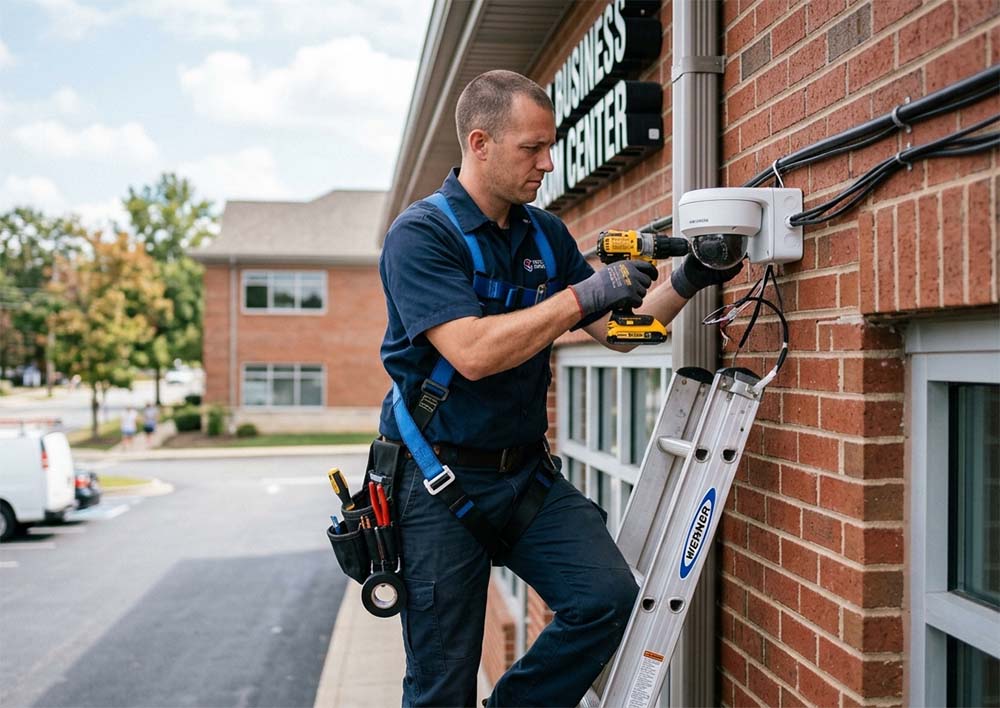
A professional CCTV installer can assess where cables can run, whether ceiling or wall cavities are accessible, and where cameras can be mounted without creating poor angles or unnecessary exposure to weather.
The trade-off is that wired systems usually require more planning and installation time. Costs can rise if cable routes are difficult, if additional containment is needed, or if the finish needs to be restored after installation.
Where wireless CCTV can make sense
Wireless CCTV can be useful when flexibility matters more than permanent infrastructure. It may suit:
- Renters who cannot install cabling
- Smaller homes with strong wifi
- Temporary camera coverage
- Townhouses or units where body corporate rules limit installation work
- Locations where one or two cameras are enough
Wireless cameras are also appealing because the upfront setup can look simpler. However, wireless performance depends heavily on signal quality. If your camera is mounted near the front fence, under an eave or at the far end of a garage, it may sit outside the strongest part of your WiFi coverage.
Privacy, placement and security should shape the decision
CCTV is not just a hardware choice. It also creates privacy and cybersecurity responsibilities.
- For homes, cameras should generally be positioned to monitor your own property rather than unnecessarily recording neighbours, shared areas or private spaces.
- The Queensland Office of the Information Commissioner explains that camera surveillance, video and audio recording can raise privacy considerations, especially where people may reasonably expect privacy.
- Cybersecurity also matters. Wireless cameras and many modern wired IP cameras are internet-connected devices. The Australian Signals Directorate’s Cyber Security Centre advises that internet-connected devices, including security cameras, should be secured, updated and configured carefully.
- That means changing default passwords, using secure WiFi, keeping firmware updated and limiting unnecessary remote access.
If CCTV camera installation is becoming unclear, costly or difficult to compare, it may be worth getting tailored advice. The team at Smart WiFi may need a site survey, floor plan, video call or in-person assessment before confirming the most suitable installation approach. Final pricing can depend on the number of cameras, cable routes, system type, storage requirements, access conditions and finishing work.
Frequently Asked Questions
Is wired CCTV better than wireless CCTV for Brisbane homes?
Often, yes, if reliability and continuous recording are priorities. Wireless CCTV can still be suitable for smaller homes, rentals or simple setups with strong WiFi.
Do wireless CCTV cameras still need power?
Many do. Some wireless cameras use batteries or solar, but others need a nearby power outlet. “Wireless” usually refers to how video is transmitted, not always how the camera is powered.
Can weak WiFi affect CCTV camera performance?
Yes. Weak WiFi can cause dropouts, delayed alerts, lower video quality or missed recordings. A WiFi survey or access point upgrade may be worth considering before relying on wireless cameras.
How many CCTV cameras does a home usually need?
It depends on the property layout. Common areas include the front entry, driveway, garage, side access and rear door. A small home may need fewer cameras than a larger corner block or multi-level property.
Is it legal to install CCTV around my Brisbane home?
Home CCTV is common, but placement matters. Avoid unnecessary recording of private areas, neighbouring properties or places where people reasonably expect privacy. For specific concerns, seek qualified legal or privacy advice.


